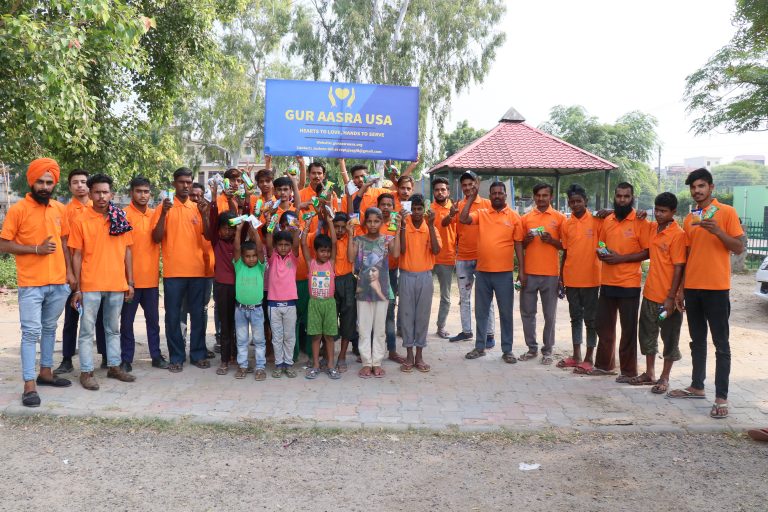
WHO WE ARE

I remember it like it was yesterday—my grandmother and I, struggling to carry fifteen blankets, bundled up in our arms as we made our way to an all-girls Sikh orphanage in Mohali, Punjab, India.


At the time, it felt a little silly—almost embarrassing. I worried that someone from my school might see me and laugh. As a child, I didn’t yet understand the depth of kindness and the power of giving.


When we arrived, I stepped off the rickshaw, dust clinging to my shoes. The headmistress greeted us with warmth, her gentle nod conveying a silent gratitude. She led me inside, through a narrow hallway, until we reached a modest T.V. room, where about a hundred girls sat in neat rows, their eyes fixed on a flickering game show—the younger ones up front, the older ones sitting behind. Their chatter filled the room, a hum of youthful energy and innocence.


The headmistress called out fifteen girls, gesturing for them to follow us to the porch. I clutched the blankets tightly, then one by one, placed them in each girl’s hands. Some smiled shyly, others simply clung to their new blankets as if they were treasures. But at that moment, I didn’t feel much—I was just doing what I was told.


Then, out of the corner of my eye, I noticed a small face peeking through the doorway. A little girl, hesitant yet curious. The moment she realized I had seen her, she darted away, disappearing behind the shadows of the hallway.


Something about her stirred something deep within me. I turned to the headmistress and asked about her.


“Her name is Asees,” she said softly. “Her father left her here. She doesn’t speak much.”


I felt a lump form in my throat. A child, abandoned. Alone in the world, longing for love but too afraid to ask for it.


I wanted to connect with her. The headmistress had mentioned that she loved sweets—particularly Dairy Milk Bubbly, a chocolate bar that, by pure coincidence, happened to be my favorite too. Reaching into my small purse, I pulled out a bar and set out to find her.


I spotted her, sitting in a corner, clutching her knees. She was too shy to speak, too afraid to trust. Slowly, I knelt down beside her and offered her the chocolate with a warm smile.


For a moment, she hesitated, her tiny fingers lingering in the air before finally accepting it. And then, in the softest voice, she whispered,


“Thank you, Didi.”


(Didi means Sister)


No one had ever called me that before. In that moment, everything changed for me.


I realized then that charity wasn’t just about giving—it was about acknowledging, seeing, and embracing the forgotten. It wasn’t about fifteen blankets or a bar of chocolate. It was about love, dignity, and human connection.


That day, a seed was planted in my heart—a commitment to never turn away from those in need. And that seed would one day grow into Gur Aasra USA, a mission dedicated to ensuring that no child feels unseen, unloved, or forgotten.
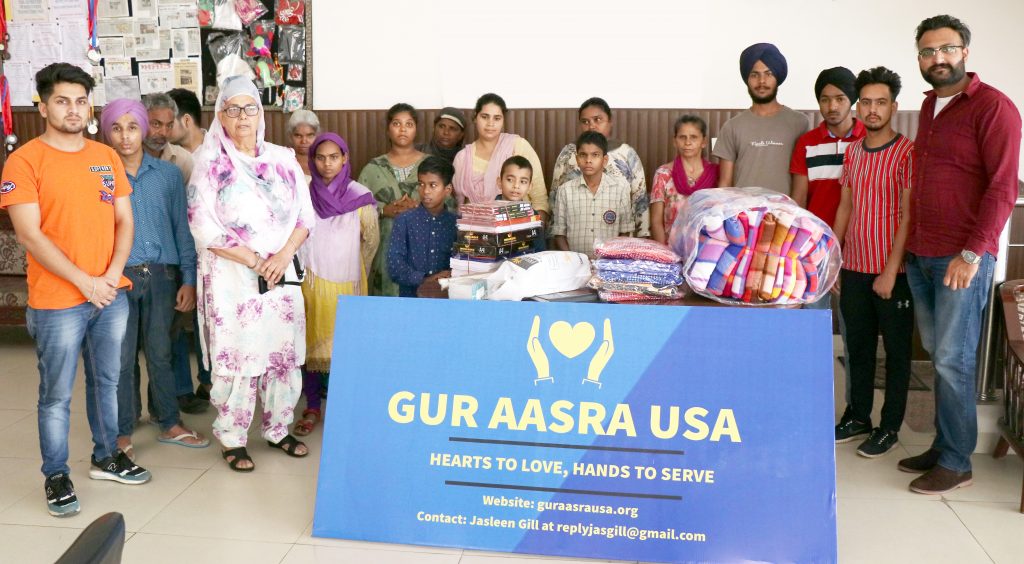
We need you and your help

We always need volunteer who love to help.

 I got an oppurnity to visit India with my grandparents when I was twelve years old, and ever since I can remember, my grandma and I visited this orphanage regularly. Over time, I developed not only a financial relationship with them but also an emotional one. 

No dictionary has enough words to describe what I felt when I’d given Asees her first chocolate, that smile on her face. I felt like a superhero. It hit me at that very moment: I am responsible for that smile. This sense of responsibility had me charged up. 

That was the very moment when I’d thought of Gur Aasra USA, inspired by the name of the orphanage, Gur Aasra Trust.  

I wanted to raise awareness and highlight the atrocities of the girls at this orphanage. Asees was not the only one in gross need. Some girls had been left on the doorstep, abandoned due to girl child stigma.   

I  helped by sending clothes, blankets, candy, and more necessities to the children but still felt empty. I couldn’t be there physically, because of my summer schedule, my work, my research projects. So, I started penning this idea of an entity, a group that would help me give back to my local community in the United States and also orphanages in India, especially aiding girls, who are treated as a burden in India. I wanted to build a channel, using my grandma’s previous work as a foundation, where anyone could contribute and change as many lives they can.

I presently support two little girls, including Asees. I try to be there for them, financially and emotionally. All expenses for this group come from my job income. I have also expanded my work from just Gur Aasra Trust to other shelters and nonprofits in India and to local shelters and organizations in the United States. 

They say money can’t buy happiness, but it sure can make a difference and provide necessary resources. In addition, the emotional relationship that I’ve built with Asees is one that I hold very close to my heart. She has become a little sister that I never had. 

Keeping up with the tempo of selfless care, I wish this initiative, Gur Aasra USA, takes a larger leap.

 *changed namesI was twelve years old when I got the chance to visit India with my grandparents. That trip wasn’t just another summer vacation—it was a journey that reshaped my heart and purpose.


Ever since I can remember, my grandmother and I visited this orphanage regularly. It started as a routine—walking through its modest gates, greeting the caretakers, and spending time with the girls. But over the years, it became something more. I formed a bond—not just financial, but deeply emotional.


Nothing could have prepared me for the moment I handed Asees her first piece of chocolate. It was just a simple Dairy Milk Bubbly, but to her, it was a gift wrapped in love and belonging. The way her eyes lit up, the way her face broke into the purest, most innocent smile—it was as if, for that one moment, all her worries melted away.


And then it hit me. I was responsible for that smile.


The realization sent a surge of warmth through me—a feeling of purpose, of responsibility. At that very moment, I knew I wanted to do more. I needed to do more.


That was the day Gur Aasra USA was born in my heart—inspired by the name of the orphanage, Gur Aasra Trust.


A Mission Bigger Than One Smile


As I looked around the orphanage, I realized that Asees was not alone in her struggles. Many of these girls had been abandoned—some left at the doorstep simply because they were born girls. In parts of India, a daughter is seen as a burden, and many families choose to discard them like unwanted belongings.


I couldn’t just stand by and watch. I started helping however I could—sending clothes, blankets, candies, school supplies—anything to bring them comfort. But deep down, I knew it wasn’t enough.


I felt a growing frustration because I wasn’t physically there when they needed me. My school, my research projects, my summer schedule—everything kept me away. I needed a way to extend my reach, to build a platform where help wasn’t limited to just my own hands.


And so, I started writing down my ideas—sketching out what would eventually become Gur Aasra USA. I envisioned a channel of giving, a bridge between my local community in the United States and the orphanages in India. I wanted to create a movement—where people, no matter where they were, could contribute to changing lives.


More Than Just Giving—Building Family


Today, I personally support two little girls, including Asees. I try to be there for them—not just financially, but as someone they can count on. Every expense for this mission comes from my own job income, and every moment spent working for it comes from my heart.


But Gur Aasra USA has grown beyond just one orphanage. We now support multiple shelters and nonprofits in India, while also assisting local organizations in the U.S.—because need knows no borders.


They say money can’t buy happiness, but I’ve learned something different. Money can provide warmth on a cold night, food for a hungry child, an education that breaks the cycle of poverty.


But beyond money, it is love, connection, and unwavering support that truly transform lives.


A Sister, A Mission, A Future


Asees is more than a child I once met at an orphanage. She is the little sister I never had.


Through her, I’ve learned that giving is not a duty—it’s a privilege. That even the smallest acts of kindness can create waves of change.


And as I continue this journey, I only hope that Gur Aasra USA will grow, reaching more children, more lives—offering them the love, dignity, and opportunities they deserve.


Because every child deserves to feel wanted.

Because every child deserves to smile.


And if I can be a part of that, even in the smallest way—then my purpose is fulfilled.

Scroll to top